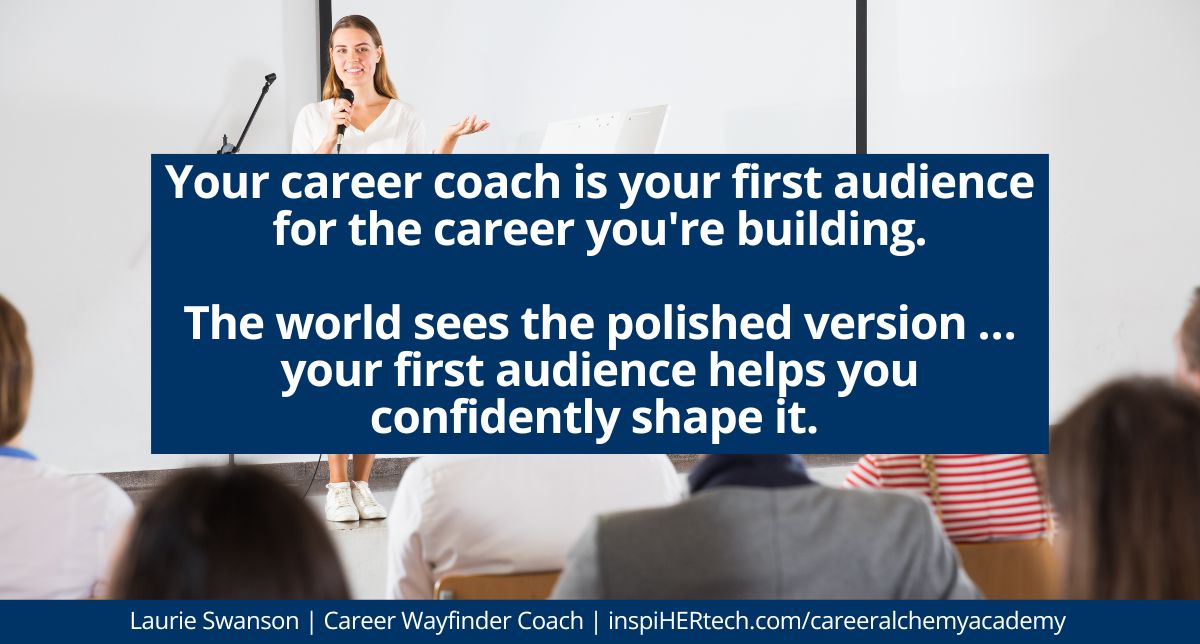
| The first audience is a person who hears, reads, or sees the earliest roughest versions of your ideas without judgement. They offer real constructive feedback and encouragement.
The first audience is the person who helps you:
- Externalize you’re thinking
- Hear yourself more clearly
- Notice what’s working and what isn’t
- Build your confidence through repetition and refinement.
I Am Listening
This is exactly what Linda McCartney did for Paul McCartney after the Beatles breakup. She was the first person to hear many of his post-Beatles songs. She gave him honest, unfiltered feedback. She was described as an invaluable, creative partner who supported and encouraged him to keep writing during this difficult time.
The Power of First Audiences
Other first audiences include Yoko Ono for John Lennon. Lennon often said Yoko was the first person he played new ideas for and that her conceptual thinking pushed him into more experimental territory.
June Carter Cash was this for Johnny Cash. June was often the first to hear his new material and helped him refine both his sound and his stage presence.
Beyoncé and Jay-Z are known to play each other unfinished tracks, giving feedback on tone, structure and emotional impact.
But it’s not just in music.
Nora Ephron, writer of When Harry Met Sally and many other iconic scripts, articles and books had her sister, Delia Ephron as her first audience. She often received early first drafts from Nora and acted as her first reader and collaborator on several screenplays.
The brothers Christopher Nolan and Jonathan Nolan routinely serve as each other’s first audience. Jonathan hands over the initial rough drafts and Christopher shapes them into films.
Greta Gerwig and Noah Baumbach share pages, scenes, and ideas before close collaborators see them. They refine voice, sharpen the writing and find emotional clarity for each other.
George Lucas and Steven Spielberg famously show each other rough cuts. Spielberg was one of the first to see Star Wars and encouraged Lucas to keep going.
In the literary world, there are many first audiences.
Tabitha King pulled Stephen King’s draft of Carrie out of the trash and insisted he finish it.
J.R.R. Tolkien and C.S. Lewis were each other’s first audience in the Inklings writing group, reading chapters from future best sellers aloud at Oxford pubs.
James Baldwin was one of the first to read an early drafts of Maya Angelou’s I Know Why The Caged Bird Sings and encouraged her to persist.
In a business world, there were many first audience partnerships.
Laureen Powell Jobs often was the first person Steve Jobs talked to about new ideas, helping him refine the human-centered narrative behind them.
Gayle King has long been Oprah’s first audience for big decisions, scripts and speeches.
Vanessa Nadal heard early versions of Lin-Manuel Miranda’s Hamilton songs long before they reached the stage.
Your Career Coach is Your First Audience
Just like great artists and professionals need a place to try out rough drafts before showing them to the world, a career coach becomes your first audience by helping you bring the right words, structure, clarity, and confidence as you elevate your career.
Your coach is the first to:
- Hear your interview responses before you find your rhythm
- Listen to your elevator pitch while it’s still messy
- Review your résumé and LinkedIn profile before you make them public
- Rehearse your “ask” before you talk to your boss about that raise or promotion
- Stress-test your presentation before you present
- Refine your sales pitch before you go in front of the decision-maker
And they help you build confidence to start the job search, go after that stretch role, or become your own boss before you feel fully ready.
Every great creator has the first audience … that person who hears the cheesy first version of that half-formed idea.
In your career, your coach is that person for you.
The person who helps you shape your career narrative so that you can confidently share it with the world.
|