|
Once again, two things in my world collided in the form of a synchronicity that created a fabulous learning.
In the morning, I was coaching with a client. She wanted to talk about a situation she found herself in that was uncomfortable. She had said yes to helping someone on a project, and now she felt resentful.
She had said yes not because she was excited about the work or even because she wanted to help this person out.
She had said yes because she was afraid that if she said no, there would be blowback that could hurt her future relationship with this person and perhaps her career advancement.
WHOA.
In the afternoon, I hosted Alison Fragale, PhD and author of Likeable Badass: How Women Get the Success They Deserve, as part of the Chicago Executive’s Leadership Circle I co-lead.
Her book is about balancing being warm while also being assertive at work.
And it is way more than boundary setting.
Certainly, becoming good at setting boundaries is part of the solution. We know this.
Another piece of the puzzle is something I coach on a lot … tuning into your body genius ahead of saying yes (or no) to anything. Checking in to make sure that what is being asked of you has you feeling excited, curious, or willing … versus obligated or resentful.
Another great strategy.
But saying yes out of fear of potential career blowback is bigger than boundaries and following the inner nudge.
This required Alison Fragale wisdom.
During the Q & A portion of the talk, I brought this up to Alison. Her response was spot on!
She said my client is not wrong. In fact, as much as we’d like to think that people can take a no without it leading to any fallout, that is not always the case.
A no can lead people to think that you’re not someone they can come to when they need something—or that you’re not a team player.
Alison shared a strategy she uses called “doing the calculus” of the situation. She looks for ways to make it a win/win for all concerned.
She recognizes that adjusting to other people’s schedules, even if it causes her an extra phone call or two, can be worth it when, in the bigger picture, she gains value from the situation.
For example, being seen as someone who doesn’t get thrown off balance when a change occurs.
Or, in her case as an author, if a company wants to make a change that requires some acrobatics on her part, she will do what she can to say yes because it builds goodwill with the organization and supports future speaking engagements.
She plays the long game.
She is seen as someone who does not become a diva when things do not go exactly as expected.
Playing the Long Game With Your Boundary Setting
This is the thing that no one really says out loud.
Yes, you need boundaries but sometimes saying no does come with consequences.
Ignoring that reality doesn’t help. But neither does saying yes to everything and slowly building resentment.
This is where the calculus comes in.
It’s not about becoming someone who always says no.
And it’s not about continuing to be the person who always says yes.
It’s about getting honest and intentional.
Looking at each ask and asking yourself:
Because the women I see navigating this well aren’t the ones with the “best boundaries.”
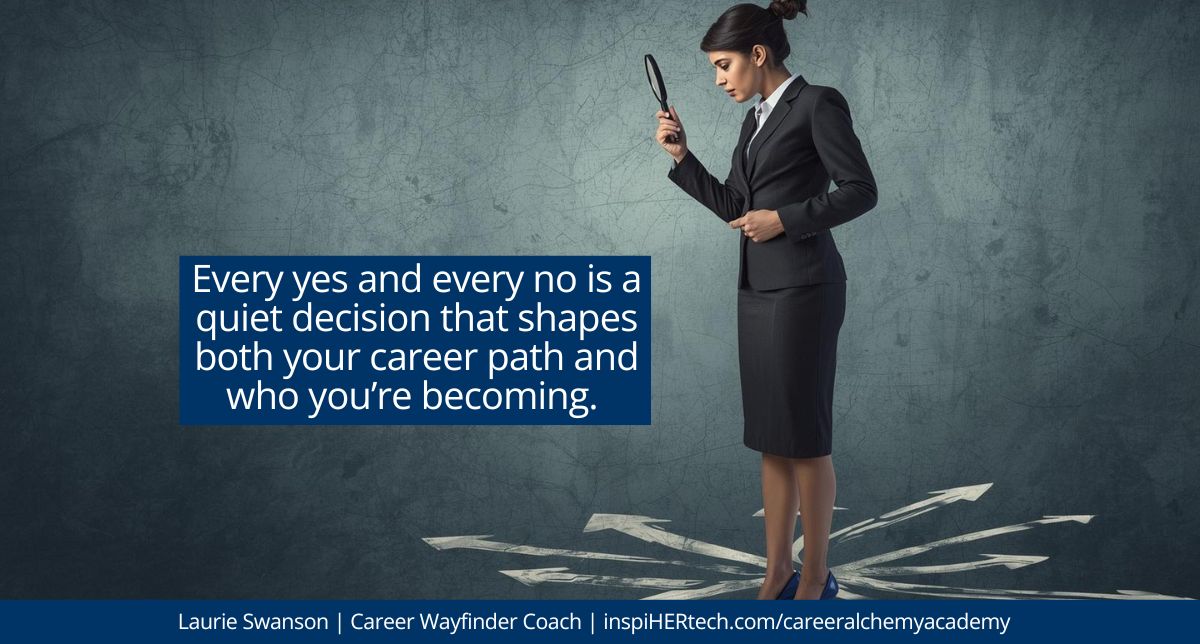
They’re the ones who understand the trade-offs. They know that every yes and every no is shaping how they’re seen, what opportunities come their way, and how sustainable their career actually feels.
They embrace the math!
|