I was listening to a recent Mel Robbins Podcast episode where she was talking to Dr. Rahul Jandial, a world-renowned brain surgeon, neuroscientist, and author.
Dr. Jandial moved to Los Angeles at nine years old from Kashmir, giving his family a fresh start away from real danger, something he speaks about with deep gratitude.
He wasn’t a great student. He didn’t enjoy reading or learning in a traditional classroom. And yet, against all odds, he was accepted to University of California, Berkeley and moved to San Francisco.
But while he was at Berkeley, things started to unravel.
His mother was diagnosed with breast cancer.
A neo-Nazi moved in next door, bringing regular threats to his family.
And at school, he was partying a little too hard.
Rahul recognized that his life had entered a time of crisis. Something had to give.
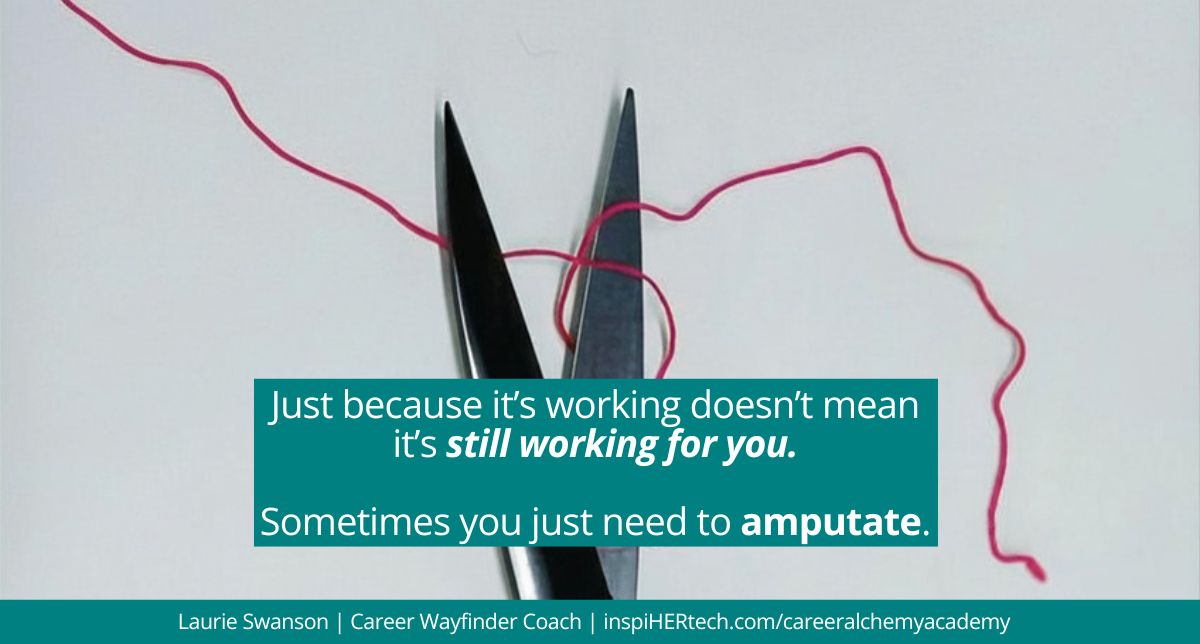
He made an unusual decision: he chose to “amputate” Berkeley. This meant he chose to leave the prestigious university and move home to attend community college instead.
When you think about it, the one bright, stable thing in his life, the thing most people would recommend he hold on to, was the very thing he cut.
I’ve been feeling a similar sense of crisis over the past year.
And I never would have called it that until I heard this conversation.
“Crisis” felt too dramatic.
- I’m not experiencing the physical effects of war.
- My business has been growing steadily.
- I have a stable, loving relationship.
- My kids are doing well.
- I have great friends and close family.
By all accounts, things are good.
But when I looked at the definition, something clicked:
A crisis is simply a time when a difficult decision must be made.
Not chaos.
Not disaster.
Just a decision point.
My version of crisis looked like this:
I couldn’t catch my breath.
I was moving constantly from one commitment to the next.
At night, I’d collapse in my chair, eat leftovers, and scroll.
Things I normally want to do like send someone flowers for a hard time, or shoot someone a quick text to check in, suggest a game of online Spades was not happening.
I was spent.
Nothing left in the tank.
And physically, I felt like crap.
That’s when I knew:
Whether I wanted to admit it or not, I was in a form of crisis … emotionally, mentally, and physically.
And I needed to amputate something.
Like Dr. Jandial, the thing I chose didn’t fully make logical sense to my business plan.
I decided to cut back on networking events.
The very thing that helped me build my business.
Grow my client base.
Get invited to speak.
Learn from incredible people.
All good things. All chosen.
And also?
The source of overextension.
Too many nights out.
Disrupted sleep.
A constant feeling of depletion.
So, I’m cutting back.
Not because networking is bad but because, right now, it’s too much.
If you’re in a season where you are not doing the things you normally would be doing because you just don’t have enough in the tank and you know something needs to change, but you’re not sure what …
You might be at a crisis point.
And it might be time to amputate something.
Not necessarily the obvious thing.
Not necessarily the logical thing.
But the thing that’s quietly costing you more than it’s giving.
Try this:
Close your eyes and ask yourself:
Where might I be experiencing a quiet crisis right now?
And what might I need to amputate?
Then this week, choose one thing, big or small, and amputate it.
It might be forever because you find you no longer needed it like you thought you did.
Or it could be just for this week but still worth it!
For me, I’m still networking—just far less.
I am looking for more events closer to home whenever possible.
I am being more intentional about which events I go to and when. The late nights were getting to me. I am a morning person. Where are my morning meetings?
But the biggie is what I someone how forgot. I started checking back in with how each decision felt.
What I am realizing is that I stay out of crisis by choosing those things that feel aligned and saying no to everything else.